Like any organization looking to attract people to its services (or, in the case of non-profits, also to support its efforts), life affirming ministries have to think about how we are portrayed. I have personally been on the back side of many meetings where we have to make decisions regarding “this picture or that picture” or “this phrase or that phrase” and there are always two questions we need to deliberate over:
“Who is this for?” and “What do I want them to imagine?”
When life-affirming organizations (ours included) portray a mom, baby, and dad with huge smiles, rays of sunshine on their faces, and freshly pressed and laundered attire (no spaghetti sauce), there is absolutely a simple impression we want both those who are life-affirming and those who are abortion advocates to walk away with: that life is beautiful, and that there is joy in the decision to choose it.
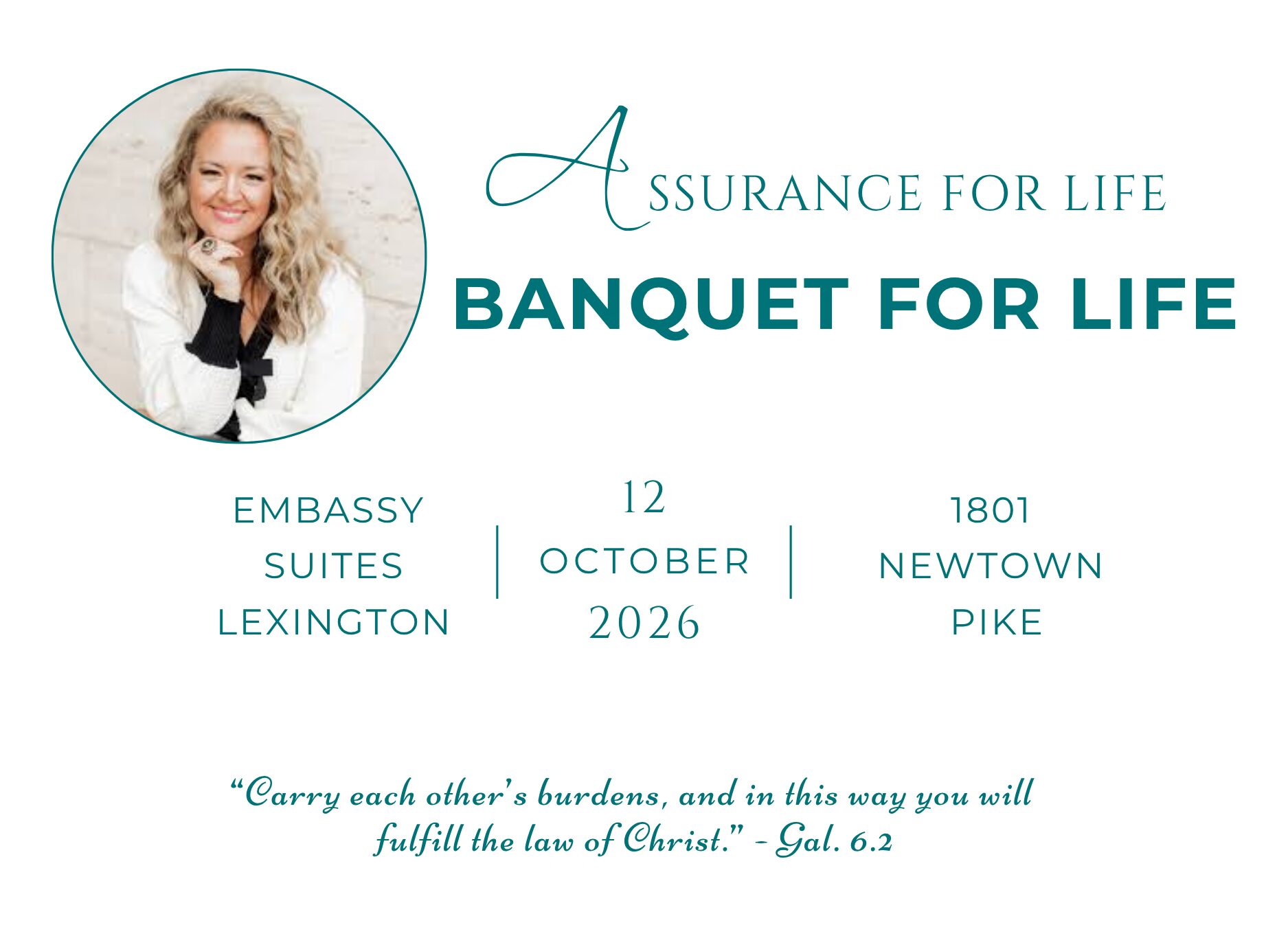
This is, of course, absolutely true. Not only do you, I, and most of those living know the truth that life is ultimately beautiful, but we hear it from clients all the time. “I can’t imagine my life any different now,” or “I am so glad I didn’t choose abortion because I would’ve regretted it” are statements we hear constantly. Indeed, if you have ever been to an Assurance banquet (and if you haven’t, you should really consider it this next year), you’ll have seen this joy and relief firsthand in our client testimonial videos.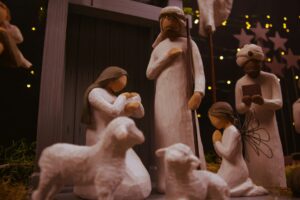
Those very real moments of a mother and son, or a father and daughter gazing into each other’s eyes with dedication and love are, in fact, the most articulate and most definitive moments we could capture. As such, when someone allows us to capture a moment of joy, or that moment where the sunbeam is casting its glow upon their heads, we absolutely want to take the photo–or write down the story–and share it as broadly as we can.
But there is another side to things that is often left out of public messaging, in marketing, and in stories: that while life can certainly be beautiful, it can also be very difficult and ugly. While the smiles are often present, sometimes the tears look like they will never end. While sometimes the sun gazes down upon us like a father’s eyes on a child, sometimes the day is as gloomy as the night.
This Christmas, I have been thinking about the portrayals of the nativity versus the real thing–the real birth of Jesus, historically, within time and space, with real people and real challenges.
As I write this, I am looking at my mantle and I see several neatly dressed, meticulously carved, well-kept figurines. These figurines–which portray a little savior in a manger, a mother, a father, sheep and goats and donkeys looking on, and the gaze of both wise men and shepherds, convey something very beautiful: the moment Light and Life (John 1) entered into this world and the salvation story of all mankind was birthed among mankind. As such, the well-cut and well-placed figurines tell us something very important, very true, and very beautiful. Their simplicity is a testimony to the simplicity of salvation.
At the same time, there is a side to the story that the typical nativity scene leaves out. It is a side to the story that if one were present, one would undoubtedly see. A mother and father worn out from lengthy and hard-beaten travel, discouraged due to closed doors, dirty, sweaty, and–most likely–starving. They were foreigners in a strange country. Without the benefits and interventions of doctors, nurses, and midwives, Mary most likely would have been nervous and maybe even fearful of the immense pain that would follow. Would she even live? Many women didn’t, and God had not actually given her assurances of that.
Joseph was going to be a father, but not a biological one. Adoptive fathers have a lot of pressures and dynamics that are different from biological ones. Imagine the uncertainty that Joseph must have felt knowing he was going to be a Dad to the Son of God! Besides this, how was he going to care for Mary during labor? Childbirth was women’s work. There was no YouTube tutorial for a guy to follow. How was he going to protect this child and his wife from the germs, diseases (they didn’t even know that’s what they were, but nevertheless knew sickness often happened) and complications that often follow birth?
Being born in an animal trough was not the romantic scene it is often portrayed as in our images, pictures, and nativity sets. No one in the ancient world would have looked at a manger and thought, “You know what? That looks nice, let’s go have a child there.” I imagine the dread, the panic, and endless anxiety taking over the very moment Mary’s water broke.
And, yet, we as Christians hold onto the fact that even amongst animal refuse and broken-down hovel which housed the manger, even in the psychology of uncertainty, even in pain and blood and sweat that came along with labor anywhere (much less here), the most beautiful thing to ever happen on this earth happened: the Life that is Life to all was born.
Assurance would not be doing its job for clients if we tried to convince them that everything was going to be all sunrays and smiles. Assurance would not be doing its job if we tried to convince our supporters and partners of this either. I sometimes tell our staff, “Part of our responsibility is to help people see how beautiful life is, but the other part is to prepare them for the hardness that will follow. It is to help people know that while this will be hard, it is also incredibly beautiful.”
Hard.
But beautiful.
This Christmas when you look out across your decor and you take a gander at the nativity scene you quite likely have sitting up somewhere in your home or your church, I want you to take a moment and gaze at it. Allow your mind to imagine the realness and hardship associated with that scene. Because while it was beautiful, it was also hard.
And that is one other way that Jesus meets us “where we are”–in between the hard and the beautiful. Because in between the hard and beautiful is life. The same life we celebrate. The same life we pray that others would find. The same life we hope you also know.
Merry Christmas from Assurance for Life.